Sunday, April 29, 2012

Cetacean Conservation-challenges and solutions

Steering the right course for cetacean conservation
By Randall Reeves, Chair of IUCN’s Cetacean (dolphins whales and porpoises) Specialist Group and one of the recipients of the Species Survival Commitment  Chair's Citation of Excellence in recognition of his leadership of whale and dolphin conservation worldwide.

Sperm whale, photo by Imène MelianeOne of the greatest challenges facing cetacean conservation is to get a clear and conclusive diagnosis. By that I mean understanding, first, the true status of a species or population and second, the drivers that determine such status. Gone are the days when things seemed simple: stop the deliberate killing (or at least reduce and manage it rationally) and the animals will recover. Now there are so many other factors to consider that we are often in a state of decision paralysis, unable to move ahead with confidence that one particular fix, or even a particular suite of fixes, will turn things around.


Another challenge is to avoid being so distracted by crisis situations that we fail to pay attention to ‘non-crises’ – by that I mean populations that appear to be doing fine but rapidly and unexpectedly prove otherwise.
We need to avert more species extinctions, having recently lost the Yangtze river dolphin (baiji), and find more effective ways of using the ‘charisma’ of cetaceans – without in the process compromising scientific integrity – for ecosystem protection and restoration.
The best conservation success stories for cetaceans are those of the groups of people who have steered international bodies in certain directions. This includes the International Whaling Commission towards protection of species like right whales, gray whales and humpback whales that are now recovering in many parts of their range; the United Nations towards banning large-scale driftnets on the high seas which were killing huge numbers of dolphins and porpoises and the tuna industry in the Pacific towards ‘dolphin-friendly’ fishing practices which have dramatically reduced the mortality of dolphins.
Perhaps the most significant contribution of our Specialist Group has been to raise global awareness of freshwater cetaceans and provide support for conservation biologists and activists who are working in very difficult circumstances to improve the prospects of those species.
articles from: IUCN-http://portals.iucn.org/blog/2012/04/12/steering-the-right-course-for-cetacean-conservation/

Saturday, April 28, 2012

Save The Frogs Day -28th April

http://savethefrogs.com/day/
Save The Frogs Day is the world's largest day of amphibian education and conservation action. Events are currently planned in Australia, Bangladesh, Belize, Bhutan, Brazil, Bolivia, Canada, Colombia, Czech Republic, Dominica, Ecuador, Germany, Ghana, Hungary, India, Italy, Kenya, Liberia, Madagascar, Malaysia, Mauritius, Mexico, New Zealand, Pakistan, Panama, Peru, Phillipines, Portugal, Romania, Sierra Leone, South Africa, Spain, Sweden, Taiwan, Turkey, Uganda, Ukraine and the United States. Help us reach our 2012 goal of 200 events in 30 countries: please organize an event in your community, and ask your local schools and environmental organizations to take part as well.

Visit SAVETHEFROGS! for more information!

Why We Must SAVE THE FROGS!

 “When we save the frogs, we’re protecting all our wildlife, all our ecosystems and all humans.” -- Dr. Kerry Kriger, Founder & Executive Director of SAVE THE FROGS!, Washington DC, Save The Frogs Day, April 29 2011 

Frog populations have been declining worldwide at unprecedented rates, and nearly one-third of the world’s amphibian species are threatened with extinction. Up to 200 species have completely disappeared since 1980, and this is NOT normal: amphibians naturally go extinct at a rate of only about one species every 250 years!!! Amphibian populations are faced with an onslaught of environmental problems, including pollution, infectious diseases, habitat loss, invasive species, climate change, and over-harvesting for the pet and food trades. Unless we act quickly, amphibian species will continue to disappear, resulting in irreversible consequences to the planet’s ecosystems and to humans.

Frogs are an integral part of the food web 
Tadpoles keep waterways clean by feeding on algae. Adult frogs eat large quantities of insects, including disease vectors that can transmit fatal illnesses to humans (i.e. mosquitoes/malaria). Frogs also serve as an important food source to a diverse array of predators, including dragonflies, fish, snakes, birds, beetles, centipedes and even monkeys. Thus, the disappearance of frog populations disturbs an intricate food web, and results in negative impacts that cascade through the ecosystem. Photo courtesy David Dennis.

 "Insect masses like fireworks explode. 
Dengue, Malaria, West Nile Virus:
 Discomfort, despair will fill your abode.
 This is what your life will be without us." 
--Frog Poetry by Michael Dutton

Frogs are bioindicators 

Most frogs require suitable habitat in both the terrestrial and aquatic environments, and have permeable skin that can easily absorb toxic chemicals. These traits make frogs especially susceptible to environmental disturbances, and thus frogs are considered accurate indicators of environmental stress: the health of frogs is thought to be indicative of the health of the biosphere as a whole. Frogs have survived in more or less their current form for 250 million years, having survived countless ice ages, asteroid crashes, and other environmental disturbances, yet now one-third of amphibian species are on the verge of extinction. This should serve as an alarm call to humans that something is drastically wrong in the environment.

An ecological indicator they are 
The most accurate so far 
Pollution, destruction and disease 
We need to hear their pleas 
-- Frog Poetry by Shruti Sengupta, 25, India 

Frogs are important in medical research that benefits humans 
Frogs produce a wide array of skin secretions, many of which have significant potential to improve human health through their use as pharmaceuticals. Approximately 10% of Nobel Prizes in Physiology and Medicine have resulted from investigations that used frogs. When a frog species disappears, so does any promise it holds for improving human health.


"And what is there to life if a man cannot hear the lonely cry of a whippoorwill or the arguments of the frogs around a pond at night?" -- Chief Seattle, 1854

Tuesday, April 17, 2012

NEWS: More Emperor Penguins than Previously Thought

FRESH FROM MONGABAY http://www.mongabay.com/
Scientists count penguins by satellite, find twice as many as expected (photos)
mongabay.com
April 14, 2012


Satellite images show twice as many emperor penguins as previously thought

Emperor penguin populations in Antarctica
Map showing the locations of Emperor penguin colonies in Antarctica. Graphic courtesy of the British Antarctic Survey, whose scientists were involved in the research. Click image to enlarge.


The population of emperor penguins in Antarctica is nearly twice as high as previously estimated according to a new satellite-based assessment.

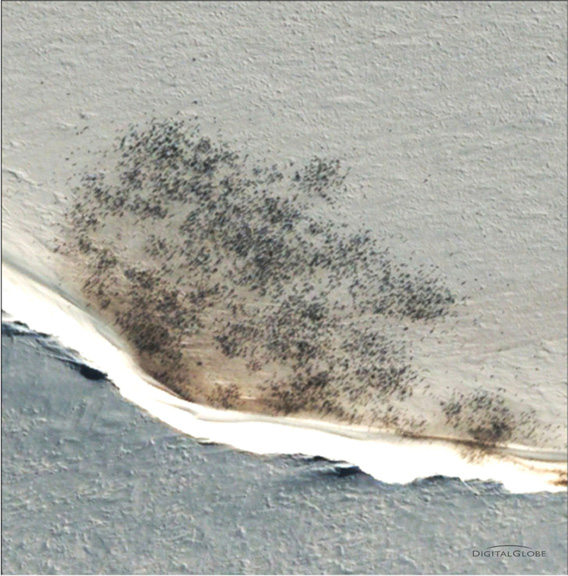
The census technique is based on detecting penguin colonies and then counting individual birds. Colonies are located by looking for large patches of ice discolored by penguin poop or guano.

This approach turned up 44 colonies across Antarctica — including seven that hadn't been detected previously — and 595,000 birds. The emperor population had previously been thought to range between 170,000-350,000.

“The methods we used are an enormous step forward in Antarctic ecology because we can conduct research safely and efficiently with little environmental impact, and determine estimates of an entire penguin population, said co-author Michelle LaRue from the University of Minnesota in a statement. “The implications of this study are far-reaching: we now have a cost-effective way to apply our methods to other poorly-understood species in the Antarctic, to strengthen on-going field research, and to provide accurate information for international conservation efforts.”

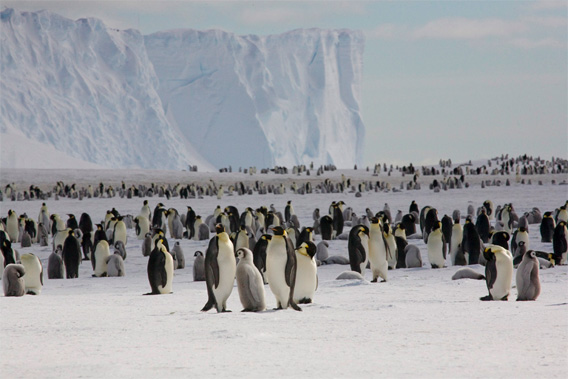
Emperor penguins on the sea ice close to Halley Research Station
Emperor penguins on the sea ice close to Halley Research Station. Photo courtesy of the British Antarctic Survey.

The findings are significant because they help scientists determine a baseline from which they can measure the impact of climate change on emperor penguin populations. Ecologists say many penguins may be vulnerable to shifts in prey distribution and density as well as changes in sea ice cover, which could increase mortality rates of fledgling penguins.

"Current research suggests that emperor penguin colonies will be seriously affected by climate change," said co-author Phil Trathan of the British Antarctic Survey. "An accurate continent-wide census that can be easily repeated on a regular basis will help us monitor more accurately the impacts of future change on this iconic species."

Aerial photograph of an emperor penguin colony
Aerial photograph of Halley Bay Emperor penguin colony. Photo courtesy of Digital Globe.

The research is published in this week's issue of PLoS ONE: An Emperor Penguin Population Estimate: The First Global, Synoptic Survey of a Species from Space.


CITATION: Fretwell PT, LaRue MA, Morin P, Kooyman GL, Wienecke B, et al. (2012) An Emperor Penguin Population Estimate: The First Global, Synoptic Survey of a Species from Space. PLoS ONE 7(4): e33751. doi:10.1371/journal.pone.0033751


Read more:http://news.mongabay.com/2012/0414-penguins_from_space.html#ixzz1sHzvezgI


Friday, March 16, 2012

National Geographic Live! Mattias Klum - Face-Off with a Lion


NatGeo Photographer Mattias Klum Talks About Going Face to Face with Lion

Monday, March 12, 2012

Tuesday, February 14, 2012

Thursday, February 9, 2012

Tarsiers have ultrasonic communication

A recent study has revealed that Philippine tarsiers are capable of communicating with each other via ultrasonic sounds, which are inaudible to most animal species including humans. This type of communication might have developed in order to compensate for the inefficient nocturnal vision of tarsiers and may serve as an alarm call mechanism.
It was not understood why tarsiers sometimes seemed to be yawning, as their mouths were opening but no sound was audible. By recording sounds using an ultrasonic microphone, it was discovered that tarsiers were emitting sounds ultrasonically, at a sound-level far from the range of the human ear.

The Philippine Tarsiers, which was the study species, is a near-threatened species due to extensive habitat destruction with a decreasing population trend

Study Abstract

"Few mammals—cetaceans, domestic cats and select bats and rodents—can send and receive vocal signals contained within the ultrasonic domain, or pure ultrasound (greater than 20 kHz). Here, we use the auditory brainstem response (ABR) method to demonstrate that a species of nocturnal primate, the Philippine tarsier (Tarsius syrichta), has a high-frequency limit of auditory sensitivity of ca91 kHz. We also recorded a vocalization with a dominant frequency of 70 kHz. Such values are among the highest recorded for any terrestrial mammal, and a relatively extreme example of ultrasonic communication. For Philippine tarsiers, ultrasonic vocalizations might represent a private channel of communication that subverts detection by predators, prey and competitors, enhances energetic efficiency, or improves detection against low-frequency background noise."

more information:
http://blogs.scientificamerican.com/observations/2012/02/08/tiny-tree-dwelling-primate-called-tarsier-sends-and-receives-ultrasonic-calls/

article website: http://rsbl.royalsocietypublishing.org/content/early/2012/01/27/rsbl.2011.1149
references:

Dartmouth College (2012, February 8). Tiny primate is ultrasonic communicator.ScienceDaily. Retrieved February 9, 2012, from http://www.sciencedaily.com­/releases/2012/02/120208220210.htm

M. A. Ramsier, A. J. Cunningham, G. L. Moritz, J. J. Finneran, C. V. Williams, P. S. Ong, S. L. Gursky-Doyen, N. J. Dominy. Primate communication in the pure ultrasound. Biology Letters, 2012; DOI:10.1098/rsbl.2011.1149

Shekelle, M. & Arboleda, I. 2008. Tarsius syrichta. In: IUCN 2011. IUCN Red List of Threatened Species. Version 2011.2. <www.iucnredlist.org>. Downloaded on09 February 2012.

Tuesday, February 7, 2012

New Nature Reserve Established in Peru

The government of Peru together with an indigenous group have established a new nature reserve in the Amazon. The Maijuna Reserve covers 390,000 hectares of pristina forest and river banks, and is home to endangered wildlife such as giant river otters, jaguars and brazilian tapirs.


Read more:http://news.mongabay.com/2012/0207-hance_maijunareserve.html#ixzz1ljjtLJys

CUBE is going on an expedition to another nature Reserve in the Peruvian Amazon, please helps us by doing a few simple fundraising tasks. Have a search on our easysearch page, and shop online via our easyfundraising page! Each time you search or make an online purchase, a few percentage will be given to fund our expedition.


Easyfundraising also has promotions that you will not want to miss, so you are not only saving money but also supporting a good cause :)


Follow us at: http://www.twitter.com/cubeorg

Blog: http://cubeorg.blogspot.com/


Join our Flickr Group:

http://www.flickr.com/groups/naturallyurban/


Support Conservation Research in the Peruvian Amazon:

http://lauranunes.easysearch.org.uk/

http://www.easyfundraising.org.uk/causes/lauranunes/?u=29KHZL

http://www.indiegogo.com/4-week-research-assistant-in-Peru?a=293585


Sunday, February 5, 2012

All in the Family, nature PORTUGAL

Peneda-Gerês National Park, Portugal

July 2010

more at:
http://www.flickr.com/photos/solero/sets/72157624520250377/


Follow us at: http://www.twitter.com/cubeorg

Blog: http://cubeorg.blogspot.com/


Join our Flickr Group:

http://www.flickr.com/groups/naturallyurban/


Support Conservation Research in the Peruvian Amazon:

http://lauranunes.easysearch.org.uk/

http://www.easyfundraising.org.uk/causes/lauranunes/?u=29KHZL

http://www.indiegogo.com/4-week-research-assistant-in-Peru?a=293585


Saturday, February 4, 2012

Tracking the mighty albatross - Environment Sci - Video - 3 News

Video:Tracking the mighty albatross - Environment Sci - Video - 3 News


Follow us at: http://www.twitter.com/cubeorg

Blog: http://cubeorg.blogspot.com/


Join our Flickr Group:

http://www.flickr.com/groups/naturallyurban/


Support Conservation Research in the Peruvian Amazon:

http://lauranunes.easysearch.org.uk/

http://www.easyfundraising.org.uk/causes/lauranunes/?u=29KHZL

http://www.indiegogo.com/4-week-research-assistant-in-Peru?a=293585


Snow Leopard Trust Featured on BBC World News!


Follow us at: http://www.twitter.com/cubeorg

Blog: http://cubeorg.blogspot.com/


Join our Flickr Group:

http://www.flickr.com/groups/naturallyurban/


Support Conservation Research in the Peruvian Amazon:

http://lauranunes.easysearch.org.uk/

http://www.easyfundraising.org.uk/causes/lauranunes/?u=29KHZL

http://www.indiegogo.com/4-week-research-assistant-in-Peru?a=293585

Friday, February 3, 2012

Grasshopper, PORTUGAL

Peneda-Gerês National Park, Portugal

July 2010

more at:

http://www.flickr.com/photos/solero/

Follow us at: http://www.twitter.com/cubeorg

Blog: http://cubeorg.blogspot.com/


Join our Flickr Group:

http://www.flickr.com/groups/naturallyurban/


Support Conservation Research in the Peruvian Amazon:

http://lauranunes.easysearch.org.uk/

http://www.easyfundraising.org.uk/causes/lauranunes/?u=29KHZL

http://www.indiegogo.com/4-week-research-assistant-in-Peru?a=293585

Young Sally Lightfoot Crab, GALAPAGOS

Galapagos Islands,
Ecuador,
April 2009

Red rock crab (Grapsus grapsus)
a sally lightfoot :)

more at:
http://www.flickr.com/photos/solero/


Follow us at: http://www.twitter.com/cubeorg

Blog: http://cubeorg.blogspot.com/


Join our Flickr Group:

http://www.flickr.com/groups/naturallyurban/


Support Conservation Research in the Peruvian Amazon:

http://lauranunes.easysearch.org.uk/

http://www.easyfundraising.org.uk/causes/lauranunes/?u=29KHZL

http://www.indiegogo.com/4-week-research-assistant-in-Peru?a=293585

Thursday, February 2, 2012

Insect in a purple flower, PORTUGAL


in Reserva Natural do Sapal de Castro Marim V.R.S.A, Algarve Portugal

in April 2010


Follow us at: http://www.twitter.com/cubeorg

Blog: http://cubeorg.blogspot.com/


Join our Flickr Group:

http://www.flickr.com/groups/naturallyurban/


Support Conservation Research in the Peruvian Amazon:

http://lauranunes.easysearch.org.uk/

http://www.easyfundraising.org.uk/causes/lauranunes/?u=29KHZL

http://www.indiegogo.com/4-week-research-assistant-in-Peru?a=293585

Wednesday, February 1, 2012

VIDEO: “Chasing Ice” receives Excellence in Cinematography Award for Documentary Films at Sundance

Ground-breaking research in the Amazon River

Researchers are listening to fish sounds in the Amazon river.
This emerging technique in marine and aquatic ecology may be useful in the monitoring of sound-emitting fish populations, their dispersal trends in space and time and also their activity patterns.
It can also be used for studies in courtship behaviour and spawning, allowing the detection and conservation of critical habitat sites.
Furthermore, studies on noise pollution can also be conducted, thus providing a bigger understanding into the anthropogenic noise and its interference in the fishe's behaviour and ecology.

Operation Wallacea is supporting a ground-breaking research initiative in the Peruvian Amazon, in order to document the aquatic sounds of the Amazon River. Lack of data on the aquatic sound database is one of the biggest limitations of this research field, therefore Operation Wallacea's involvement will undoubtedly contribute enormously to this area of research and consequently to our increasing understanding on fish behaviour, ecology and conservation.

It is expected that the sounds recorded during the Peru expeditions this summer will be new to science!

CUBE is going to take part in this research initiative, please support this cause!
http://lauranunes.easysearch.org.uk/
http://www.easyfundraising.org.uk/causes/lauranunes/?u=29KHZL
http://www.indiegogo.com/4-week-research-assistant-in-Peru

Read more:
http://www.biodiversityscience.com/2012/01/31/fish-sounds-in-the-amazon/?utm_medium=email&utm_campaign=Issue+5+-+volunteers&utm_content=Issue+5+-+volunteers+CID_035ee8cc7bd0330945665b3379012517&utm_source=E+Newsletter&utm_term=Scientists+are+using+underwater+technology+to+listen+in+on+fish

Follow us at: http://www.twitter.com/cubeorg
Blog: http://cubeorg.blogspot.com/

Join our Flickr Group:
http://www.flickr.com/groups/naturallyurban/

Support Conservation Research in the Peruvian Amazon:
http://lauranunes.easysearch.org.uk/
http://www.easyfundraising.org.uk/causes/lauranunes/?u=29KHZL
http://www.indiegogo.com/4-week-research-assistant-in-Peru?a=293585

Yellows and Browns in Gerês, Portugal

Peneda-Gerês National Park, Portugal

July 2010

Follow us at: http://www.twitter.com/cubeorg

Blog: http://cubeorg.blogspot.com/


Join our Flickr Group:

http://www.flickr.com/groups/naturallyurban/


Support Conservation Research in the Peruvian Amazon:

http://lauranunes.easysearch.org.uk/

http://www.easyfundraising.org.uk/causes/lauranunes/?u=29KHZL

http://www.indiegogo.com/4-week-research-assistant-in-Peru?a=293585

Snow Leopards and Stem Cells

A study by scientists at Monash University are using stem cells to study the endangered Snow Leopard.

Study Abstract:

Induced pluripotency is a new approach to produce embryonic stem-like cells from somatic cells that provides a unique means to understand both pluripotency and lineage assignment. To investigate whether this technology could be applied to endangered species, where the limited availability of gametes makes production and research on embryonic stem cells difficult, we attempted generation of induced pluripotent stem (iPS) cells from snow leopard (Panthera uncia) fibroblasts by retroviral transfection with Moloney-based retroviral vectors (pMXs) encoding four factors (OCT4, SOX2, KLF4 and cMYC). This resulted in the formation of small colonies of cells, which could not be maintained beyond four passages (P4). However, addition of NANOG, to the transfection cocktail produced stable iPS cell colonies, which formed as early as D3. Colonies of cells were selected at D5 and expanded in vitro. The resulting cell line was positive for alkaline phosphatase (AP), OCT4, NANOG, and Stage-Specific embryonic Antigen-4 (SSEA-4) at P14. RT-PCR also confirmed that endogenous OCT4 and NANOG were expressed by snow leopard iPS cells from P4. All five human transgenes were transcribed at P4, but OCT4, SOX2 and NANOG transgenes were silenced as early as P14; therefore, reprogramming of the endogenous pluripotent genes had occurred. When injected into immune-deficient mice, snow leopard iPS cells formed teratomas containing tissues representative of the three germ layers. In conclusion, this was apparently the first derivation of iPS cells from the endangered snow leopard and the first report on induced pluripotency in felid species. Addition of NANOG to the reprogramming cocktail was essential for derivation of iPS lines in this felid. The iPS cells provided a unique source of pluripotent cells with utility in conservation through cryopreservation of genetics, as a source of reprogrammed donor cells for nuclear transfer or for directed differentiation to gametes in the future.


Read more:
http://www.sciencedirect.com/science/article/pii/S0093691X11004936
http://www.sciencedaily.com/releases/2012/01/120123094758.htm

References:
  1. R. Verma, M.K. Holland, P. Temple-Smith, P.J. Verma.Inducing pluripotency in somatic cells from the snow leopard (Panthera uncia), an endangered felid.Theriogenology, 2012; 77 (1): 220 DOI:10.1016/j.theriogenology.2011.09.022
  2. Monash University (2012, January 23). Saving the snow leopard with stem cells. ScienceDaily. Retrieved February 1, 2012, from http://www.sciencedaily.com­/releases/2012/01/120123094758.htm

Follow us at: http://www.twitter.com/cubeorg


Join our Flickr Group:

http://www.flickr.com/groups/naturallyurban/


Support Conservation Research in the Peruvian Amazon:

http://lauranunes.easysearch.org.uk/

http://www.easyfundraising.org.uk/causes/lauranunes/?u=29KHZL

http://www.indiegogo.com/4-week-research-assistant-in-Peru?a=293585

Nature in Valais, Switzerland

somewhere, possibly Valais, in Switzerland,
August 2010


Follow us at: http://www.twitter.com/cubeorg

Blog: http://cubeorg.blogspot.com/


Join our Flickr Group:

http://www.flickr.com/groups/naturallyurban/


Support Conservation Research in the Peruvian Amazon:

http://lauranunes.easysearch.org.uk/

http://www.easyfundraising.org.uk/causes/lauranunes/?u=29KHZL

http://www.indiegogo.com/4-week-research-assistant-in-Peru?a=293585